


ESC Amp Rating: Continuous vs Burst Current Explained
Choosing an ESC amp rating requires more than reading the number on the label. An aircraft can spend minutes at a moderate load, then demand more current during a climb. Those loads need different checks.
When comparing an ESC amp rating, continuous and burst current must be read with their test conditions. Without the cooling arrangement, duration and current definition, the larger number tells you less than it appears to.
In short
- Continuous and burst ratings describe different duties. They are not interchangeable.
- A burst figure is unusable without a duration — and, for repeated bursts, a recovery or duty-cycle condition.
- Confirm which current is being measured. Battery current, motor phase current and supply current are not the same number.
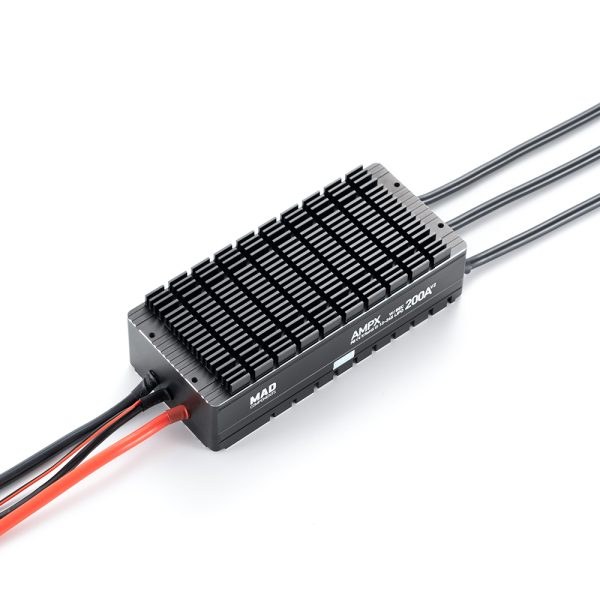
- A model name containing “200A” is not a continuous rating, a burst rating or a flight duty.
ESC amp rating: continuous and burst describe different duties
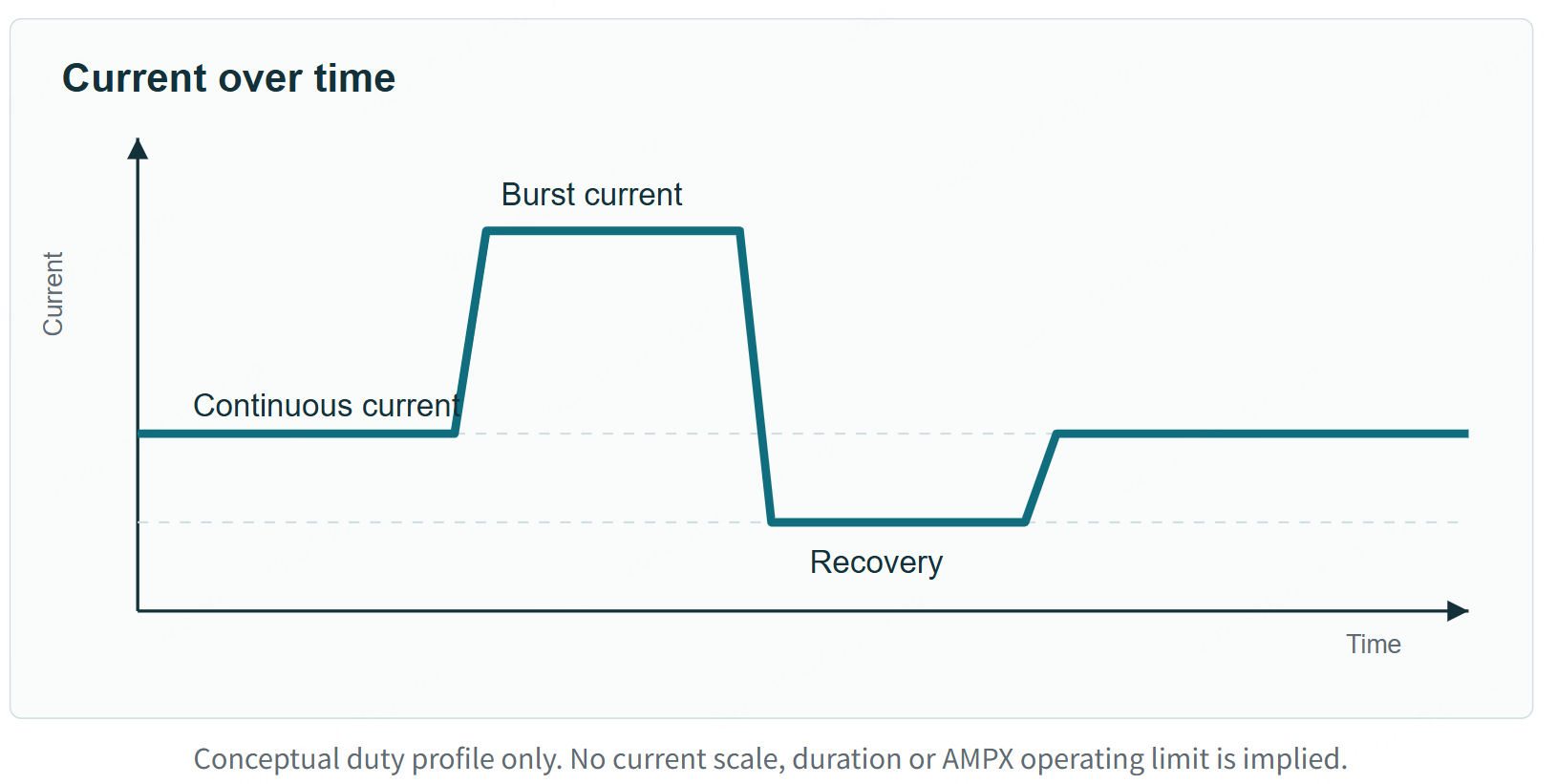
Continuous current describes a sustained electrical load within the manufacturer’s stated operating conditions. The conditions are part of the rating: voltage, ambient temperature, cooling, mounting and the applicable temperature limit all matter. A burst rating describes a higher load allowed for a limited interval under specified conditions. It needs a duration. For repeated bursts, it also needs a duty cycle or recovery condition. A brief climb after a cool start is not the same thermal event as repeated climbs late in a flight. Do not fill in the missing interval yourself. If a listing says only “peak current,” ask whether that means a permitted operating burst, a protection threshold or something else. Those are not interchangeable specifications.
The same applies to a product name. A model carrying “200A” in its name is not enough evidence to assign it a continuous rating, burst rating or flight duty. Look for the actual specification and its test conditions.
First ask what current is being measured
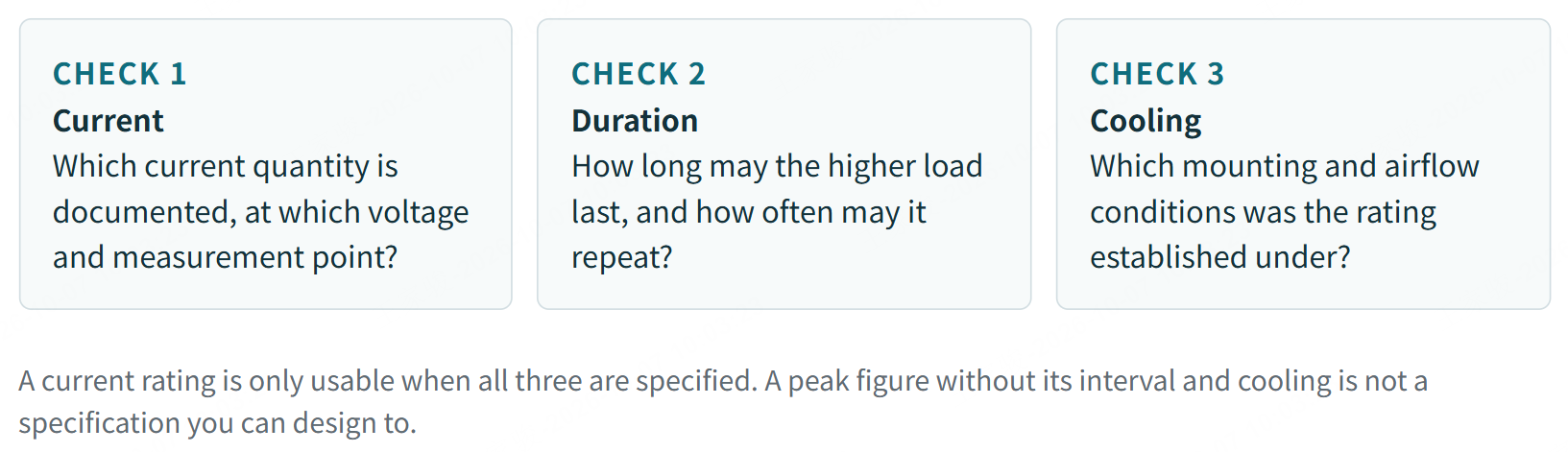
A drone motor thrust table often reports current drawn from the DC supply. An ESC document may specify battery current, motor phase current, or another defined current quantity. Confirm the measurement point before comparing them. Phase current and battery current are not generally the same number. Their relationship depends on how the controller drives the motor and on the operating point. There is no useful single conversion factor to apply across an entire flight. For a multi-channel ESC, also check whether the stated value is per channel or for the board, and whether the channels were loaded together. A per-channel figure does not automatically establish the thermal result with every channel operating in the installed aircraft.
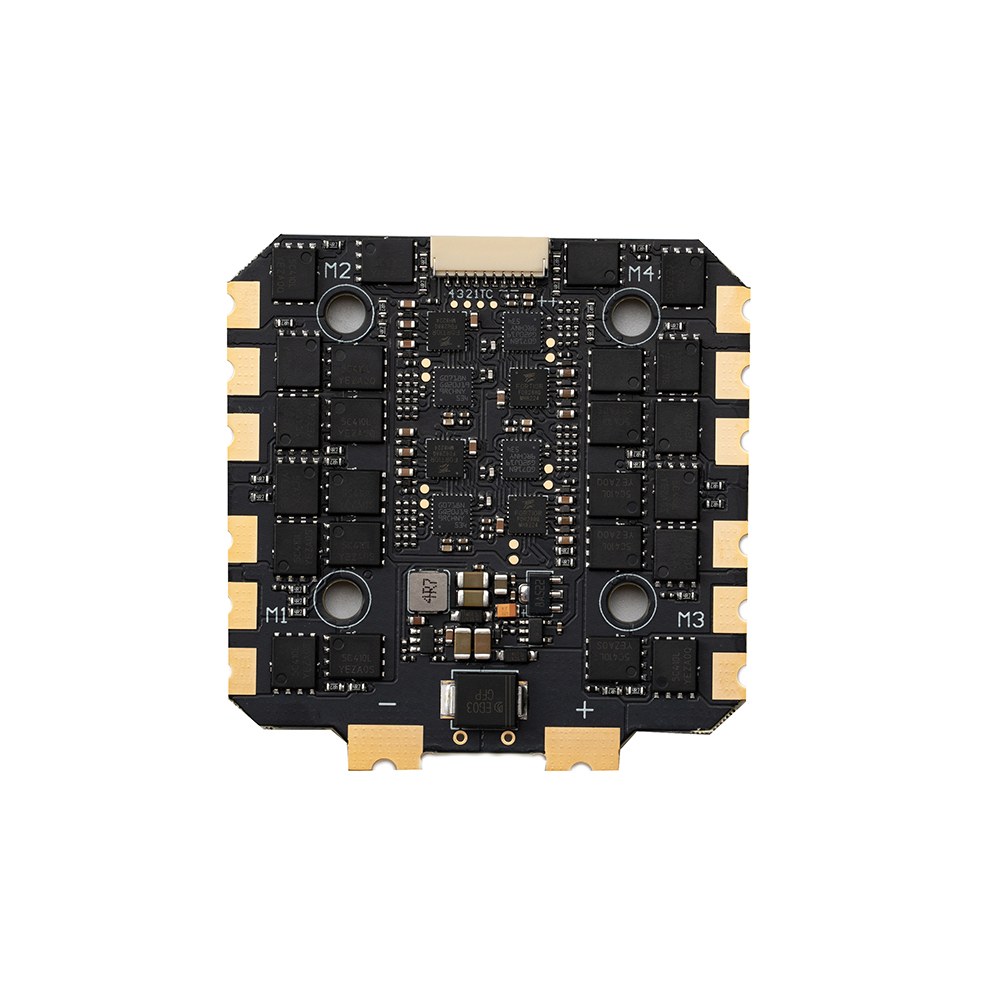
Voltage is a separate requirement. A controller can have an apparently adequate current class and still be unsuitable for the pack voltage. Verify the allowed voltage range against the actual battery’s maximum charged voltage, using the battery specification for its chemistry.
Size the ESC around sustained load and the real peaks
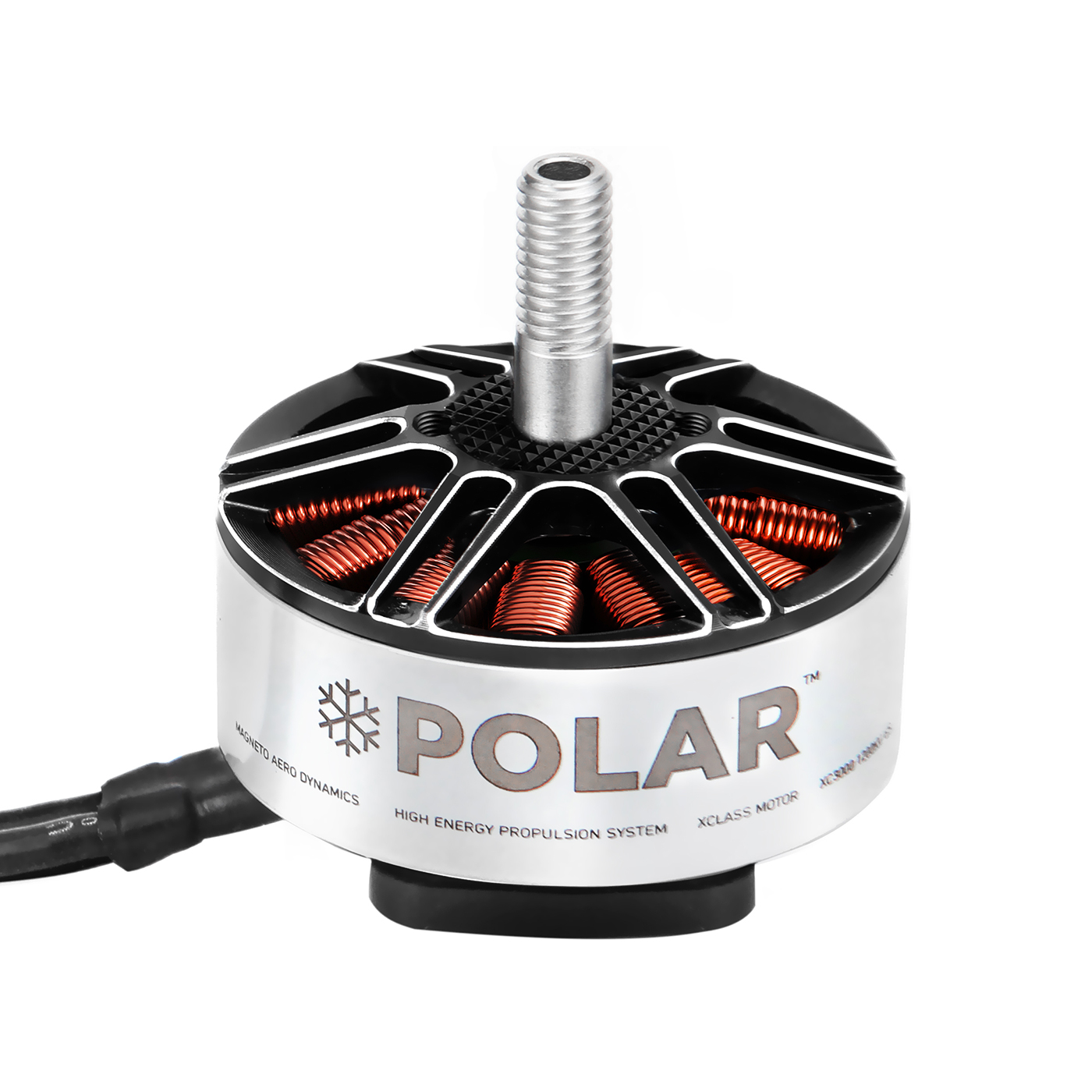
Begin with the motor–propeller–voltage combination you intend to use. Read the current at required hover thrust, then the current at the higher-load points your aircraft must reach. Keep the test setup with those values. The technical FAQ describes motor benchmark data that includes throttle, thrust, current and power, with recommended ESC and propeller information. That is a better starting point than assigning a controller from motor size alone. It still needs to be checked against the controller’s defined ratings. For sustained operation, compare the required load with the ESC’s documented continuous capability under cooling conditions relevant to your build. For a peak, compare both current and duration with the permitted burst envelope. If the report does not specify that envelope, obtain it before treating the peak as acceptable. Leave room for uncertainty, but do not replace the missing data with a fixed percentage. A margin chosen for one airframe may be unsuitable for another. State why the margin is needed, identify the conditions being covered and verify the resulting temperature behavior during sample testing.
The installation changes the thermal result
An exposed controller on a bench and the same unit inside a covered arm can experience different cooling. Check where air can reach the heat-dissipating surfaces and whether nearby components restrict that path. Include mounting instructions in the review; do not assume that any contact with an airframe is an approved cooling method. Temperature data also has a time dimension. The website FAQ says its motor-table MAX temperature is recorded during a sweep that raises throttle by 5% every three seconds. That is useful information about the test method. It is not a substitute for an ESC sustained-load temperature test in your installation.
Log voltage, current and temperature where the selected hardware supports those measurements. Run the intended sustained duty and the repeated peaks, rather than testing only a short maximum-throttle event. Use the limits and procedures supplied for the particular controller and propulsion combination.
A real product example: AMPX 200A high-voltage ESC
The AMPX 200A (12–24S) HV Drone BLDC ESC page states support for 12–24S and 40–100 V. It offers V2.0 and V3.0 with PPG, with DroneCAN and CyphalCAN selections. Those are documented product choices; they should appear in the sample specification instead of being left as an informal purchasing note.
Documented options to record in the sample specification
- Voltage class: 12–24S, 40–100 V.
- Revisions: V2.0, recommended for new UAV projects; V3.0, for PPG applications. The page states their voltage protection mechanisms differ.
- Communication: DroneCAN and CyphalCAN selections.
- Still to request: the continuous and burst current envelope for the selected revision, with burst duration and cooling conditions.
The page recommends V2.0 for new UAV projects and V3.0 for PPG applications. It also says their voltage protection mechanisms differ. Confirm the selected revision and its documentation when asking for current and thermal information. Retained information for an earlier version should not silently become the specification for a newer one. The public text does not establish a complete continuous/burst current envelope with a burst duration and cooling conditions. This article therefore does not label 200 A as a verified sustained operating current. The next procurement step is to request that rating definition for the chosen version and application. Use the drone ESC range to find candidates, then compare documented operating limits. The product family, voltage class and communication choice narrow the list; the load and thermal checks determine whether a candidate belongs on your aircraft.
Common mistakes before a sample order
One mistake is matching the ESC to the motor’s maximum current while ignoring the current at sustained thrust. Another is checking one peak and overlooking how often it repeats. Both leave gaps in the duty profile. Specification drift is less obvious. A quote may say the correct family while the delivered sample has a different revision or communication option. Record the exact variant, approved documentation and intended motor–propeller combination before testing. Keep those records for the volume order. Finally, do not assume a listed interface guarantees your intended function. The website FAQ contains a qualification that RS-485 communication for the AMPX 200A was not available under the arrangement described there. The current product page offers CAN selections. Ask which functions are supported by the selected revision and flight controller rather than combining claims from different versions.
Buying advice
Request a matched ESC quote with your motor and propeller, maximum pack voltage, sustained current, peak current and duration, plus the mounting and cooling arrangement. Ask for the current definition, continuous test conditions, repeated-burst limits and the datasheet and wiring pack for the exact revision before approving samples.
Technical reference
For a separate example of clearly distinguished continuous and peak values, see Texas Instruments’ three-phase BLDC motor driver reference design. Its ratings apply to that specific design, not to the AMPX 200A or any other ESC discussed here.
Preguntas frecuentes
Does a 200A model name mean the ESC can run at 200 A continuously?
The name alone does not establish that. You need a documented continuous rating with its voltage, cooling and temperature conditions. The public AMPX 200A page identifies the product and available versions, but its text does not define the full sustained and burst envelope. Request the specification for the selected revision before using the name as an operating limit.
ESC amp rating: can I use the burst rating for a long climb?
Only if the entire event fits the manufacturer’s permitted current, duration and thermal conditions. “Burst” does not define a standard number of seconds. Repeated climbs need a separate check because the controller may start each event warmer than the previous one. If duration or recovery conditions are missing, ask for them rather than treating the peak figure as continuous capability.
Should I choose an ESC with a fixed percentage above motor current?
A fixed percentage can be a preliminary screening rule, but it cannot prove compatibility. First confirm that both documents describe the same current quantity, then check sustained and peak loads against the ESC’s stated conditions. The remaining margin should account for your installation and load uncertainty. Verify the result in sample testing instead of treating the percentage as approval.
Why does an ESC get hot even below the advertised amp rating?
The advertised value may have been established with different cooling, voltage or loading conditions. You may also be comparing battery current with a different current definition in the controller specification. Check the exact variant, measurement point, mounting instructions and load duration. A short bench test cannot establish the thermal result of sustained operation inside the aircraft.
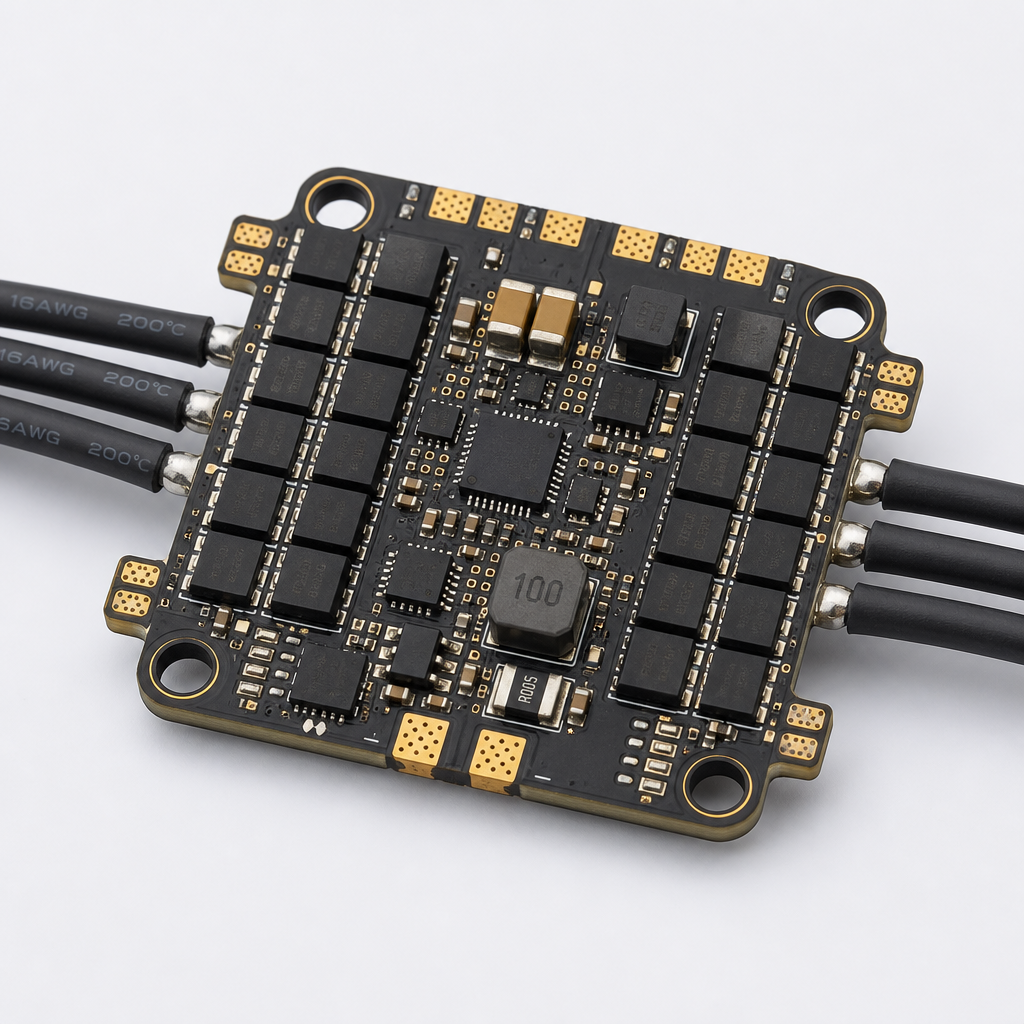
Is a 100A 4-in-1 board rated for 400 A in total?
Do not make that calculation without the board specification. The label may describe a per-channel value under particular test conditions. Shared cooling and the simultaneous channel load need to be addressed separately. Ask for the per-channel current definition and the permitted all-channel operating duty, then validate the board in its intended mounting arrangement and airflow.
Can I change battery cell count and keep the same ESC?
Check both voltage compatibility and the new motor–propeller load. The actual maximum charged pack voltage must remain within the selected ESC’s allowed range. Changing voltage can also change the propulsion operating point and current demand. A controller’s cell-count range alone does not approve every motor and propeller combination within it; review the revised combination before testing. Pair this rating method with the ESC overheating causes checklist before you size the next build.
The high voltage ESC wiring precharge checklist covers what to verify before the first power-up.