


How to Read Drone Propeller Size: 28×9.2, 63×22 and Larger
Propeller size at a glance
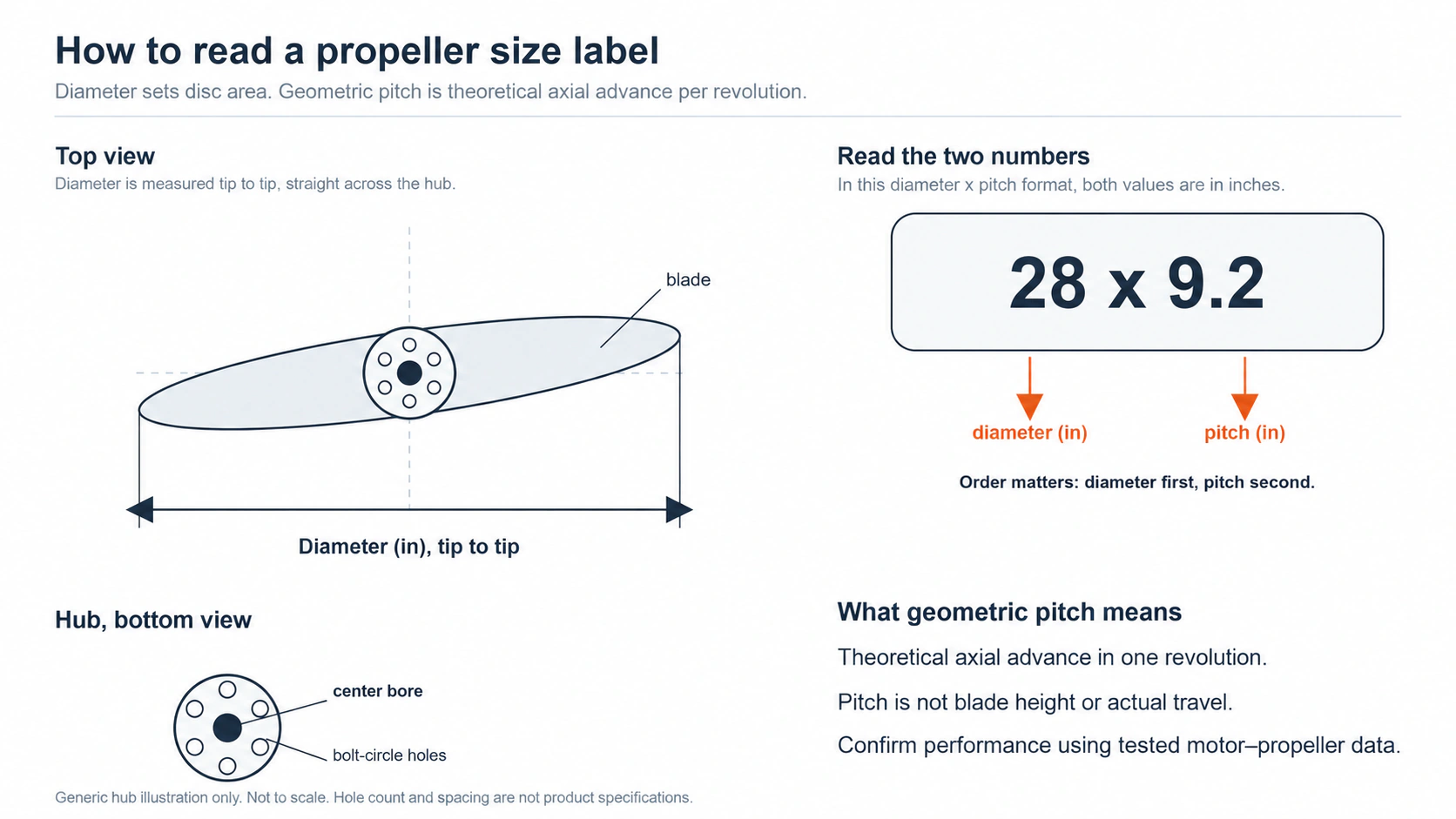
- In the diameter × pitch format, 28×9.2 means a 28 in diameter and 9.2 in of geometric pitch.
- Diameter sets rotor disc area. Geometric pitch describes theoretical axial advance per revolution, not actual travel through the air.
- Check size, rotation and mounting against the exact motor–propeller combination before ordering. The two size numbers alone do not establish thrust or current draw.
Knowing how to read drone propeller size starts with two numbers. A label like 28×9.2 or 63×22 gives the diameter and pitch; those values help shortlist a propeller, but they do not establish the motor KV or performance on their own. This guide reads those labels from smaller props up to the 78 in examples in the REACHSKY catalog.
What do the two numbers in a propeller size mean?
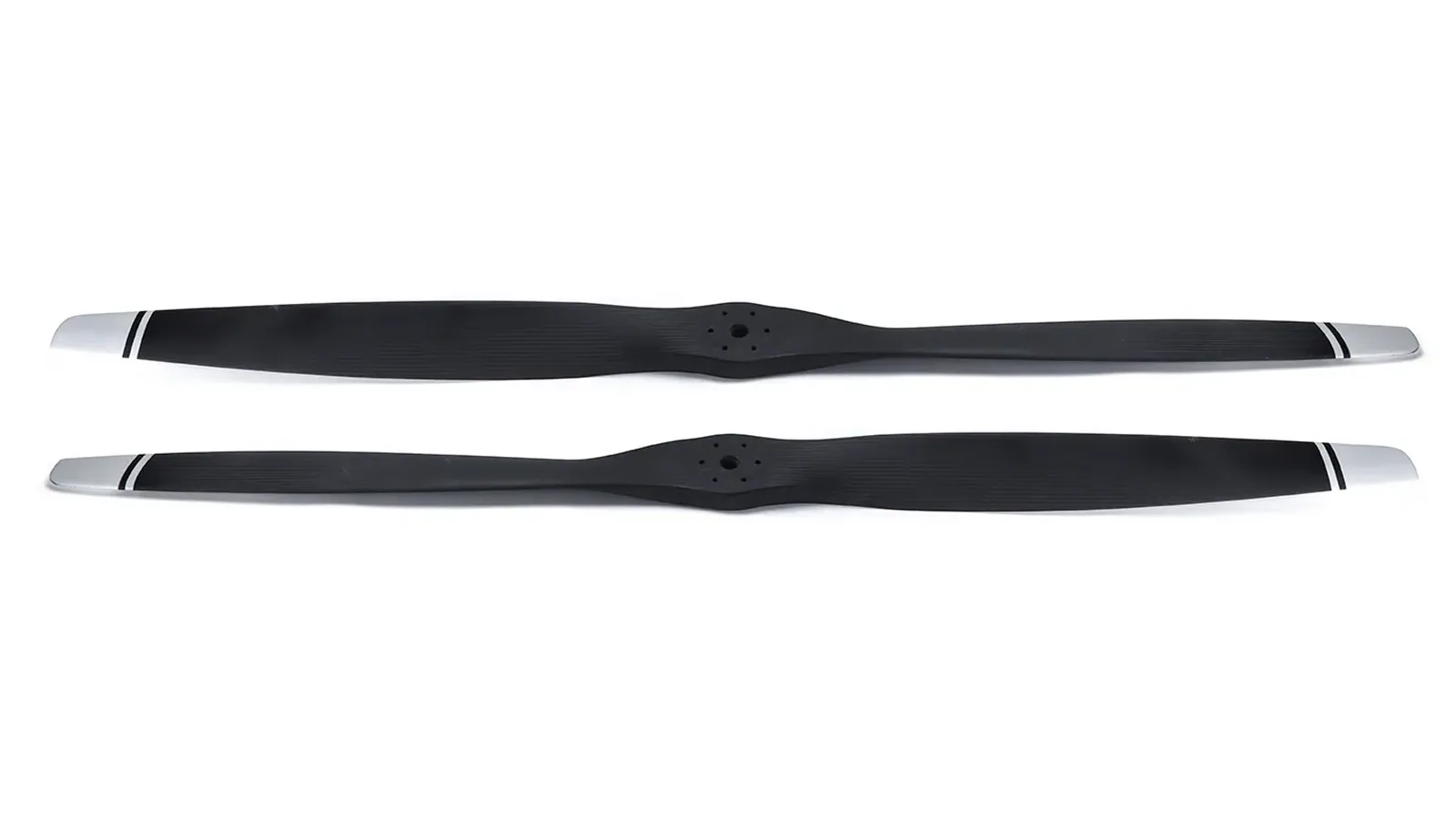
In this format, a propeller size carries two numbers, both lengths in inches. The first is the diameter: the diameter of the circle swept by the blade tips. On a two-blade propeller, it can be measured tip to tip across the hub. The second is geometric pitch: the theoretical axial distance associated with one revolution without slip. Neither number names the motor or the voltage.
APC’s propeller nomenclature guide documents this diameter × pitch convention. Other letters or numbers may identify blade count, rotation or a manufacturer’s product code; check the specific listing rather than applying the format to every marking.
| Part of the label | What it measures | Example on 28×9.2 | Why it matters |
|---|---|---|---|
| First number | Diameter of the blade-tip circle, in inches | 28 | Rotor disc area and installation clearance |
| Second number | Geometric pitch, in inches per revolution | 9.2 | One input to aerodynamic loading; not a performance guarantee |
| Separator (x or ×) | A convention, not a multiplication instruction | × | Separates the two lengths |
| Suffix (CW / CCW) | Rotation designation | CW or CCW | Must match the specified viewing direction, motor rotation and installation |
Blade count is separate: a two-blade and a three-blade propeller can have the same diameter yet not be interchangeable. Adding blades changes blade area and aerodynamic loading. It does not change rotor disc area at a fixed diameter. At the same required thrust and diameter, disc loading—thrust divided by disc area—also stays the same; see NASA’s rotor loading definitions.
How do you read a propeller size like 28×9.2 or 63×22?
Read the label left to right: diameter first, pitch second, both in inches when that is the unit specified by the manufacturer.
- Split the label at the “×”. 63×22 becomes a 63 in diameter with 22 in of geometric pitch.
- Confirm the unit. The examples below are listed in inches; 63 in is 1,600.2 mm. Do not infer units from a model code alone.
- Multiply nothing. The “×” separates diameter from pitch; 28×9.2 is not a single size of 257.6.
- Compare the pitch-to-diameter ratio. Divide pitch by diameter to compare the proportions of the listed sizes. The ratio alone does not determine thrust, efficiency or whether a propeller suits hover or cruise.
- Read the suffix. CW and CCW mark rotation, not size. Confirm the manufacturer’s viewing convention.
| REACHSKY catalog example | Diameter (in) | Pitch (in) | Pitch / diameter |
|---|---|---|---|
| FLUXER PRO 14×4.8 in Matt Prop – 2Pcs | 14 | 4.8 | 0.34 |
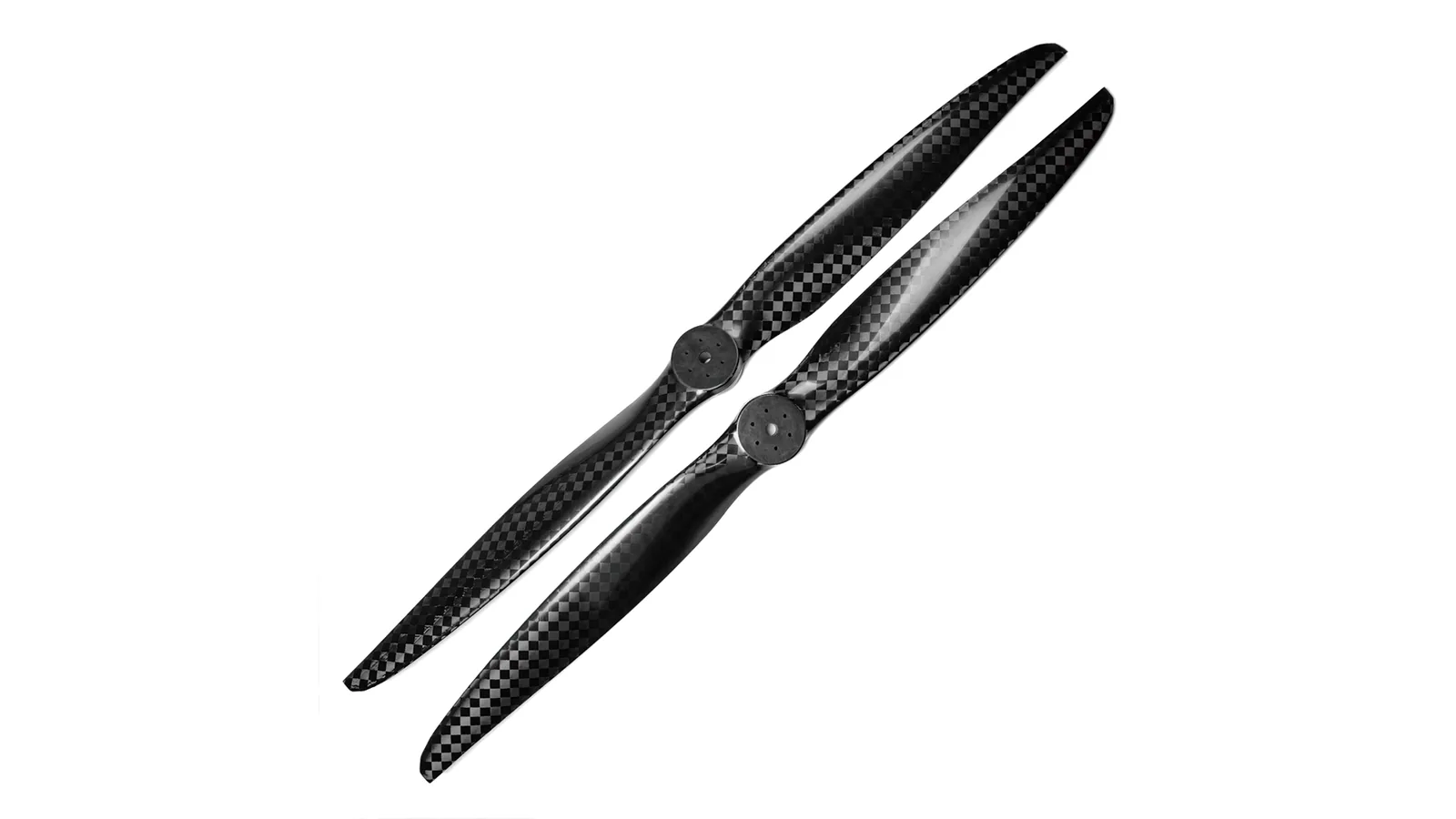
| FLUXER 28×9.2 in carbon-fiber pair | 28 | 9.2 | 0.33 |
| FLUXER PRO 63×22 in Prop | 63 | 22 | 0.35 |
| FLUXER CB2 72×31 in Prop | 72 | 31 | 0.43 |
| FLUXER PRO 78×30 in Prop | 78 | 30 | 0.38 |
These are catalog size examples, not a tested compatibility table. Ratios are calculated from the listed dimensions and rounded to two decimal places. Confirm the exact SKU, rotation, mounting drawing and operating limits before ordering.
See further options in the fixed multirotor and eVTOL propeller category.
How do diameter and pitch affect motor matching?
Diameter and pitch are inputs to a motor match, not performance specifications on their own. Changing either can affect current draw and loaded RPM; the appropriate motor depends on the whole combination.
- Bigger diameter adds disc area. It also changes clearance and aerodynamic loading. It does not guarantee more thrust or better efficiency with the same motor.
- More pitch can add load. Compare current and thrust at the required operating point. A larger pitch number is not a substitute for motor–propeller test data.
- Voltage and KV help estimate RPM. They provide a starting point; actual loaded RPM depends on the propeller and operating conditions. See KV and voltage matching.
Match in this order: establish required thrust per motor and all-up weight, shortlist diameters that fit the airframe, then check the exact motor, voltage, propeller and ESC combination against published test data. Compare current, RPM and temperature limits at the mission operating points before selecting the pitch or placing an order.
A mismatch can show up as heat or shorter flight time. NASA’s guide to propellers and thrust explains the general aerodynamic principle; our guide to reading a motor thrust table and picking the right propeller covers the bench-data side.
What hub details get missed when you read a propeller size?
The size label says nothing about mounting. Two 63 in propellers can have different hub patterns, so a correct diameter and pitch do not establish fit.
- Bolt pattern and hole details. 该 FLUXER CB2 72×31 listing uses the mounting notation
D25-D75(M8*6). Treat this as the listing’s shorthand, not a complete mechanical drawing. Request confirmation of bolt-circle diameter, center bore, hole count, and whether holes are threaded or clearance holes; do not infer a 25–75 mm adjustment range from the notation. - Center bore and shaft fit. Verify bore diameter, locating surfaces, shaft fit and the specified fastening arrangement against the motor flange drawing.
- Rotation marking. CW and CCW propellers are matched to opposite rotation directions under the manufacturer’s viewing convention. Correctly installed counter-rotating coaxial rotors can produce thrust in the same direction; opposite rotation does not inherently cancel thrust. Match handedness, motor rotation and installation orientation. NASA’s coaxial rotor study discusses interactions between counter-rotating rotors, not automatic thrust cancellation.
- Folding versus fixed. A folding assembly may have different root thickness, fasteners and clearance requirements. Check its own drawing rather than assuming it fits a fixed-propeller mount.
Check the mounting pattern as well as the size before ordering. Do not force a propeller onto a mount or assume that matching diameter and pitch makes two SKUs interchangeable.
What are the most common mistakes when reading propeller size?
Ordering errors can involve both the two size numbers and the details around them.
| Mistake | What can go wrong | What to check |
|---|---|---|
| Reading the second number as a percentage | 9.2 in of pitch is mistaken for a percentage | Confirm the format and units |
| Swapping diameter and pitch | The wrong size is quoted or bought | Read left to right: diameter first |
| Using pitch / diameter as a performance rating | A similar ratio hides differences in blade design and load | Compare the exact combination’s test data |
| Checking size but not the hub | The propeller does not fit the motor mount | Match the mechanical drawing and fastening details |
| Ignoring CW / CCW and installation orientation | Rotation and handedness may not produce the intended thrust | Verify the manufacturer’s rotation convention and airframe layout |
Buying, documents and lead time for propeller orders
Once the size is right, supply affects the schedule. Record the exact SKU, rotation and packaging quantity early so evaluation samples and later production orders use the same specification.
- Samples and volume orders: confirm the sample quantity, batch MOQ and any marking or packaging requirements for the selected SKU. A volume-quote threshold is not necessarily the minimum sample order.
- Lead time and trade terms: request written confirmation of availability, dispatch timing, shipping terms and delivery expectations for the destination.
- Warranty and documents: confirm the applicable warranty terms and request the current datasheet, mounting drawing and any SKU-specific documents your project needs. The downloads page is a starting point; confirm that the available file covers your exact version.
Large carbon propellers such as the FLUXER PRO 78×30 and the FLUXER CB2 72×31 are size examples at the larger end of the catalog. For a quote, identify diameter, pitch, blade count, material, rotation and mounting requirements. Treat required mass, balance and operating limits as items to confirm, not as facts established by the size label.
常见问题
What does a propeller size like 28×9.2 mean?
In the diameter × pitch format, it means a 28 in diameter and 9.2 in of geometric pitch. Diameter describes the blade-tip circle; geometric pitch describes theoretical axial advance per revolution without slip. Check the manufacturer’s units and any additional blade-count or rotation codes.
How do you convert propeller pitch to speed?
For a geometric pitch-speed calculation, multiply pitch in inches by RPM, then multiply by 0.0254 and divide by 60 to obtain m/s. At 9.2 in and 6,000 RPM, the result is 23.37 m/s. This is a calculated geometric reference—not measured airspeed, a thrust prediction or a universal speed limit. The FAA’s propeller handbook chapter distinguishes geometric pitch from actual advance and blade angle.
What propeller size fits a 12S setup?
There is no single size determined by 12S alone. Check the motor variant and KV, actual supply voltage, required thrust, clearance and ESC limits against a test table for the exact propeller. Confirm loaded current, RPM and thermal limits at the required duty cycle.
Does higher pitch always mean more thrust?
No. A pitch change alters the propeller’s operating characteristics, and the motor may not hold the same RPM under the new load. Compare thrust and current for the specific combination at the intended operating point rather than ranking propellers by pitch alone.
What should I check about the hub before ordering?
Confirm bolt-circle diameter, hole count, hole size or thread, center bore, root thickness and fasteners from the mechanical drawing. Check rotation and installation orientation as well. A notation such as D25-D75(M8*6) should be clarified with the supplier; it does not replace the drawing.
Choose the size first, then confirm the SKU
Read diameter first, pitch second, compare the listed proportions, and check the hub pattern. Then verify the exact combination against your voltage, motor and mission requirements. Keep the size label, mechanical drawing and test conditions together when comparing quotes.
If you know the size, browse the fixed propeller range. If you are between two sizes, send an inquiry with all-up weight, rotor count, motor model and KV, supply voltage, clearance, duty cycle and the mounting drawing. Include sample quantity and destination so the technical and purchasing questions can be addressed together.
Once diameter and pitch are fixed, choose the blade count with the three blade vs two blade propeller comparison.
All products are supplied for civil end use only.
相关文章
-
 Three Blade vs Two Blade Propeller: Heavy-Lift Trade-Offs
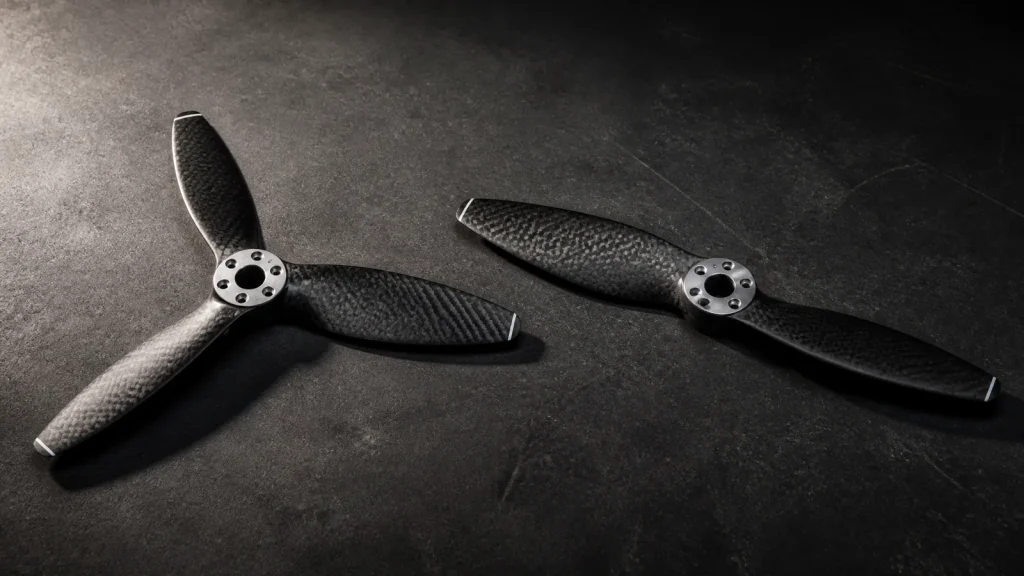
One extra blade at the same diameter buys thrust margin and a lower hover RPM, and costs current, peak efficiency and stowed volume. Here is when it pays.
-
 Falcon vs Voyager Propellers for Fixed-Wing UAVs
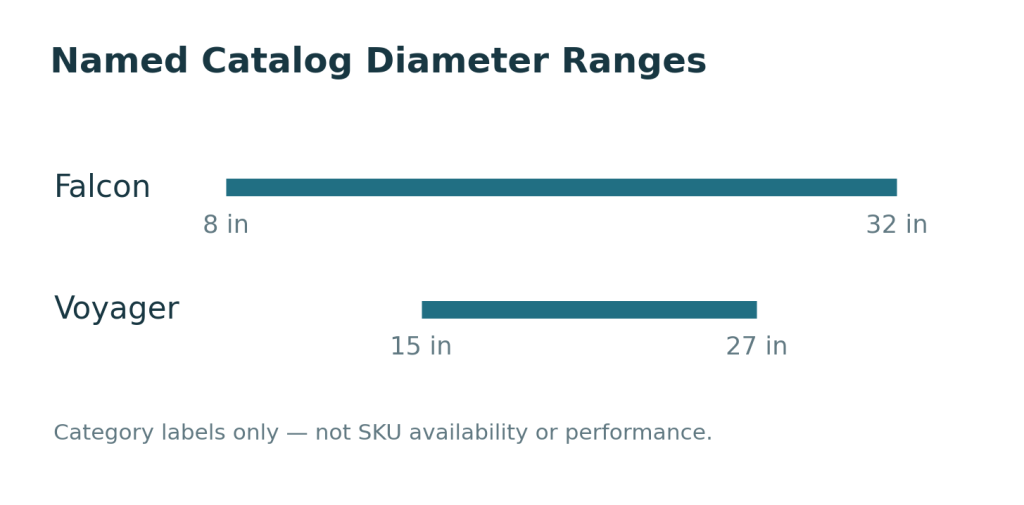
A fixed-wing propeller shortlist often starts with a diameter limit. The nose, landing gear or pusher installation leaves room for a particular disc, and the buyer searches within…
-
 How to Handle a Warranty Claim on Motors and ESCs
“The motor stopped” describes a symptom. It does not identify the delivered part, show the conditions before the event or explain what happened afterward. That is why a…
-
 CW vs CCW Propellers: Avoiding Mix-Ups in Dealer Kits
A box can contain the right diameter, the right pitch and the right number of propellers, yet still be wrong for the aircraft. The missing check is handedness.…