


Falcon vs Voyager Propellers for Fixed-Wing UAVs
A fixed-wing propeller shortlist often starts with a diameter limit. The nose, landing gear or pusher installation leaves room for a particular disc, and the buyer searches within it. That narrows the catalog, but it rarely chooses the propeller: two families can cover the same diameter while offering different pitch options and requiring different operating-point evidence.
The useful Falcon vs Voyager propeller comparison starts there. Falcon is cataloged as an 8??2-inch family; Voyager as a 15??7-inch family. Neither label is an efficiency rating. Use the range to find candidates, then compare the exact blade, motor and flight condition before approving a sample.
Falcon vs Voyager: Propeller Comparison Guide
Where the two catalog ranges overlap
The Falcon airplane propeller category covers a wider named diameter range. The Voyager airplane propeller category is listed separately as Voyager Carbon Series. The shared 15??7-inch interval means that diameter alone often leaves both families in consideration.
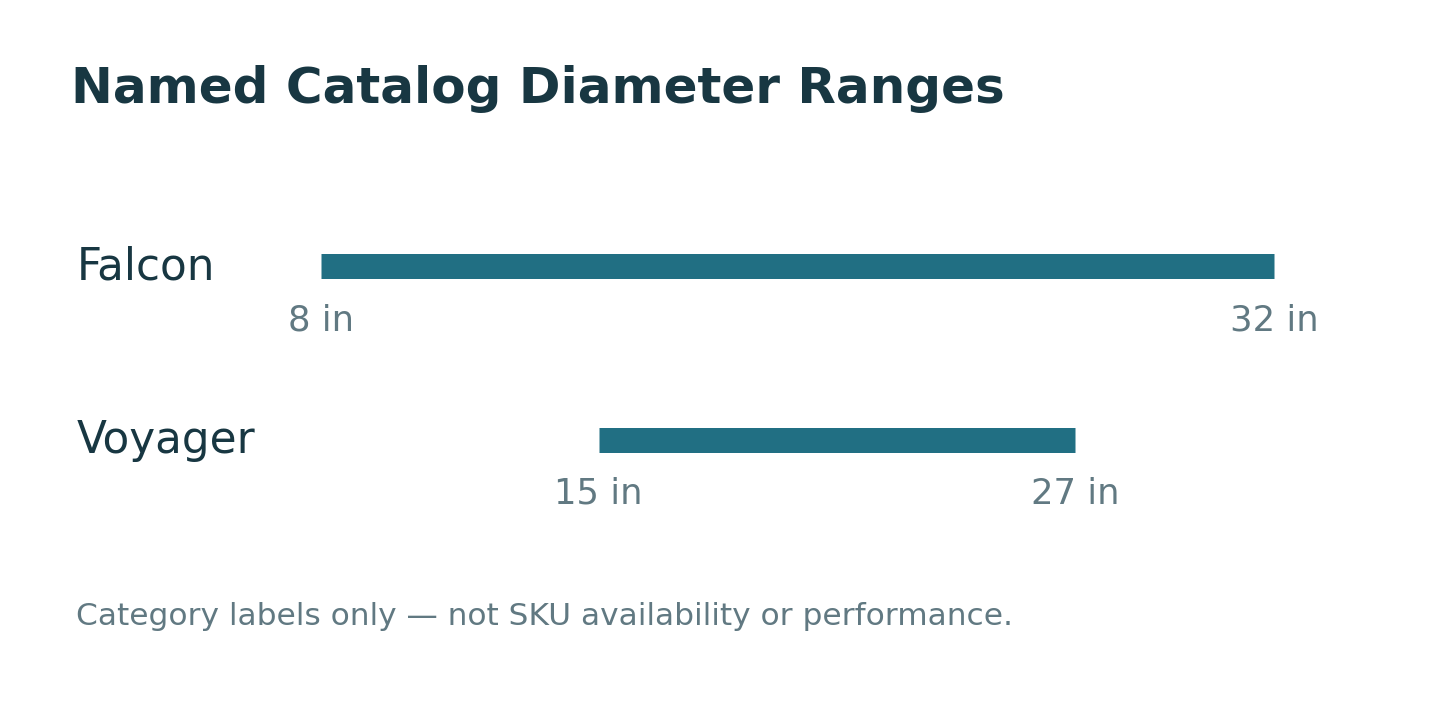
That distinction matters at the ends of the range. A listed family range is a navigation aid; the actual order needs an existing SKU and the selected option. It is also worth checking the whole category. Falcon currently has several catalog pages, while the Voyager page shows its listed models together. A first-page glance can make the Falcon selection appear smaller than it is.
Compare specific pitch choices, not a family stereotype
At a nominal 15-inch diameter, the Falcon-category product lists pitch choices including 6, 7, 8 and 10, alongside suffixed options such as 4.5W and 10P. Voyager includes a 15?15 listing and a separate 15?20 listing. These are examples of catalog choice, not a controlled comparison of efficiency or current.
Do not remove the letters from a suffixed option when requesting a quote. A suffix may identify a blade or configuration distinction that the two-number size alone does not capture. Ask for the supplier's definition rather than treating 10 and 10P as interchangeable.
| Comparison point | Falcon category | Voyager category | What the buyer still needs |
|---|---|---|---|
| Named diameter coverage | 8??2 inches | 15??7 inches | Exact listed SKU and availability |
| Shared nominal range | 15??7 inches | 15??7 inches | Pitch, rotation and blade identity |
| Example at 15 inches | Several pitch and suffixed options | 15?15 and 15?20 listings | Approved load and operating range |
| Family-level efficiency ranking | Not established by the catalog | Not established by the catalog | Comparable measurements at the mission point |
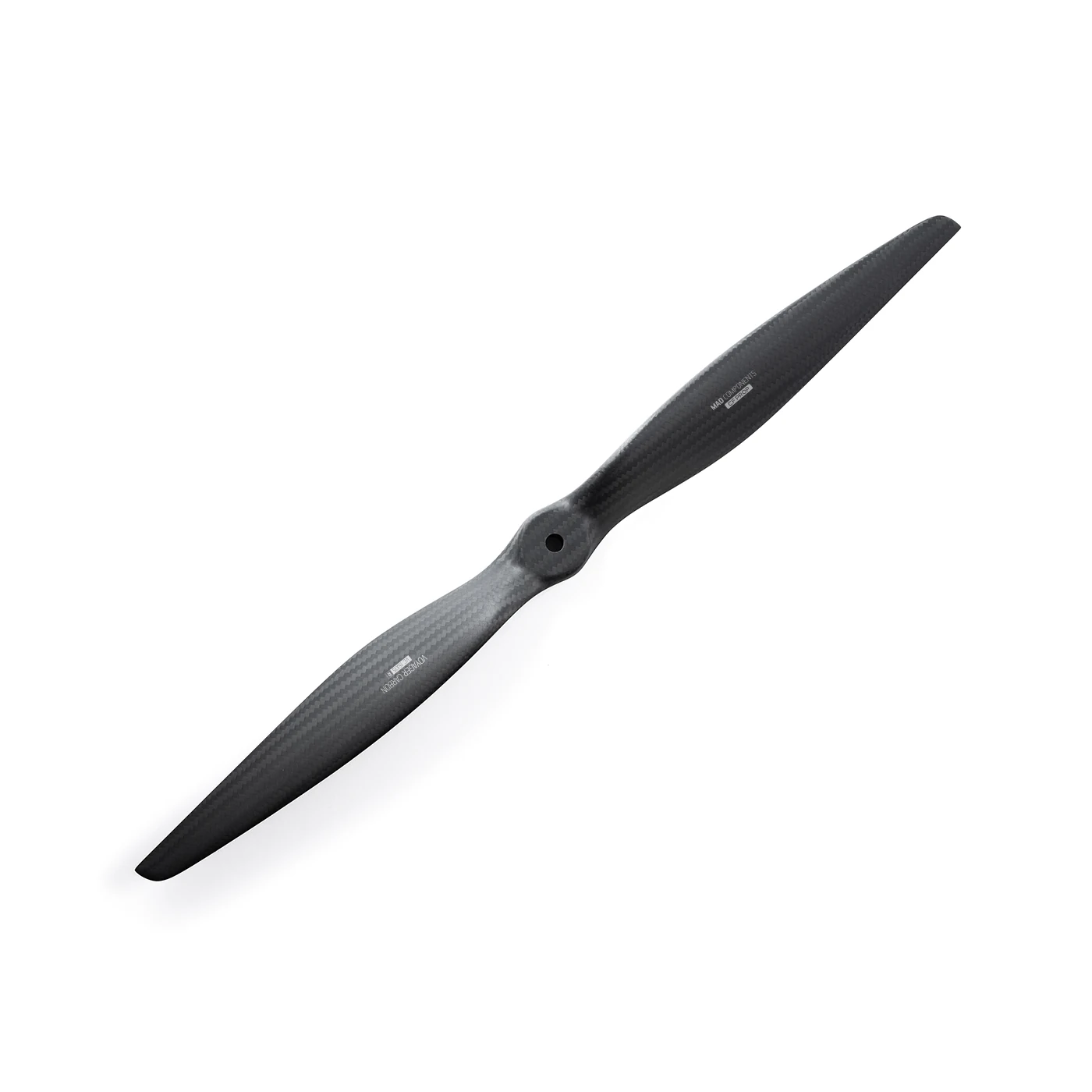
The VC 15?15 product page, for example, lists R/L rotation options and a 15?15 pitch field. That is enough to identify an ordering candidate. It does not establish a permitted RPM, motor pairing or cruise-power result for your aircraft.
Static thrust is not the whole fixed-wing job
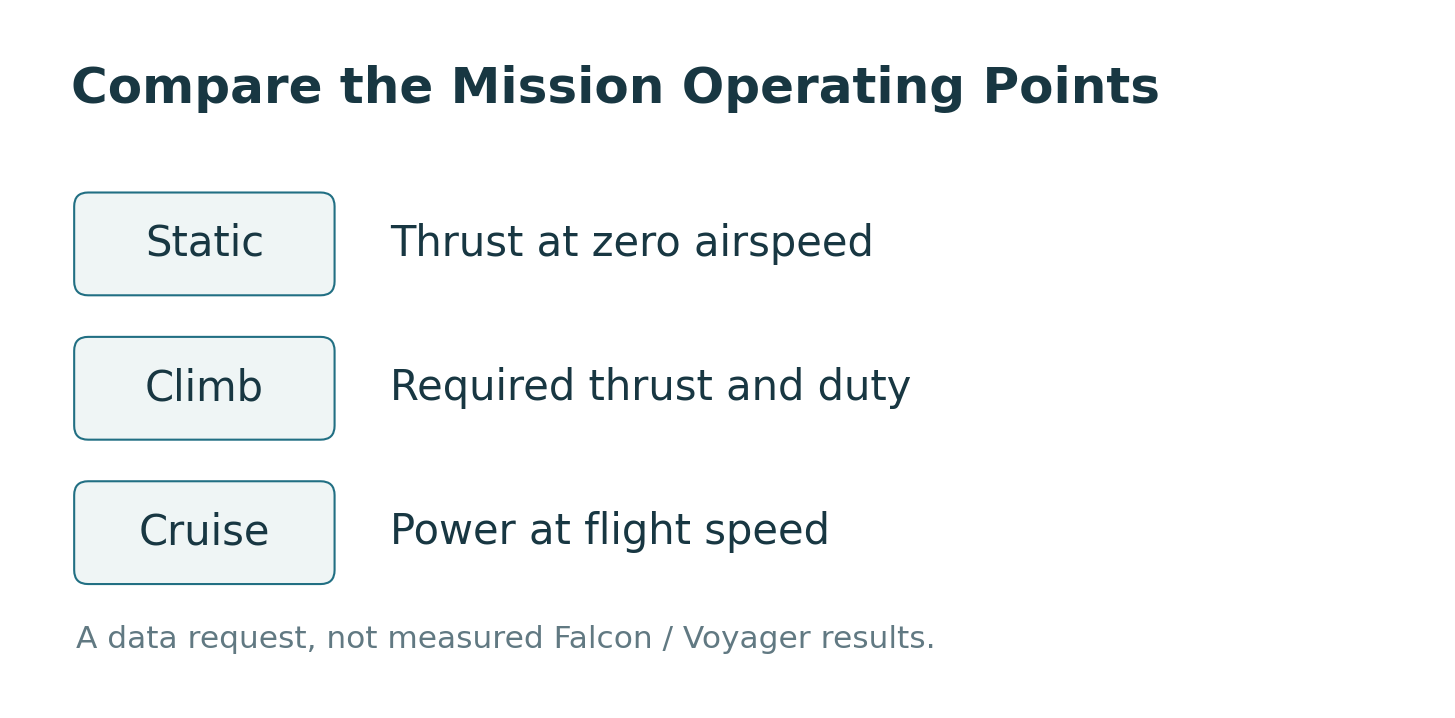
A static thrust test describes the propeller with no forward aircraft speed. A fixed-wing mission also includes climb and cruise, where the air approaching the propeller is moving. A candidate that looks attractive in a static comparison still needs evidence at the intended flight condition.
NASA's propeller analysis connects thrust to airflow and the velocity change through the disc. Its simplified model also identifies losses that require more detailed treatment. It does not provide a shortcut for ranking these two commercial families.
For a cruise-focused aircraft, request the speed, RPM and power associated with the required thrust. For a short takeoff or climb requirement, keep that operating point in the comparison as well. Choosing on cruise alone can leave the launch requirement unresolved; choosing on the largest static-thrust number can miss the mission's long-duration power demand.
The UIUC Propeller Database is a useful example of how propeller measurements are presented: defined test articles, conditions and aerodynamic coefficients. It is a research reference, not evidence that the specific Falcon or Voyager candidate has been tested there.
Keep the motor and the installation in the comparison
A family change is not a propeller-only purchasing decision if it changes the motor's load. Compare candidates using the intended supply, motor variant and controller, and record what remains constant between tests. Otherwise a favorable result may reflect a different RPM or electrical setup rather than the blade choice.
For a pusher installation, include the actual airflow and clearance constraints in the request. For a tractor installation, include the relevant spinner and hub interface. The nominal diameter does not describe the hub thickness, bolt pattern, center bore or retention method.
Do not enlarge a bore or drill a new pattern simply because a generic catalog paragraph mentions a solid hub. Obtain the applicable drawing and installation instructions for the exact propeller. A modification suitable for one blade is not automatically permitted on another.
There is a similar boundary around maximum RPM. If the listing does not provide it, request it. Do not calculate a new allowable speed from the family name, carbon-fiber appearance or a different supplier's propeller of the same diameter.
A sample comparison that can support a purchase
Keep the evaluation small enough to answer the actual decision. Start with one candidate from each relevant family that fits the installation and covers the intended operating point. Record exact part identities, rotation and any drawing revision before comparing results.
Use the same measurement definitions. Electrical input power and shaft power are different quantities; a reported efficiency is only useful when its numerator, denominator and test conditions are known. Ask for the underlying thrust, RPM and power records rather than comparing two unexplained percentages.
For repeat orders, keep the approved blade identity in the BOM. ??5-inch carbon prop??is not a repeatable specification when the catalog includes multiple pitch choices and families. Preserve the configuration that produced the accepted result so the next shipment can be checked against it.
Which family should enter the shortlist?
Start in Falcon when its named size coverage includes a required diameter outside Voyager's listed interval. Within the shared interval, include whichever exact models satisfy the installation and mission data requirements; the category name cannot decide between them.
Send REACHSKY the diameter limit, required flight conditions, motor and supply details, and the candidate blade identities through the propeller configuration inquiry form. Ask for the relevant drawings and operating data before turning the shortlist into a production order.
FAQ
Is Voyager always more efficient in cruise than Falcon?
That is not established by the public catalog. A useful comparison needs exact propellers, comparable operating conditions and a defined efficiency calculation. The family label alone cannot support the claim.
Can I substitute a Voyager propeller with the same diameter?
Not on diameter alone. Check pitch, blade identity, rotation, hub interface, permitted RPM and the motor's load. A supplier-approved substitution should name the actual part, not just the family.
Does a 15?15 propeller make the aircraft travel 15 inches per revolution?
The pitch designation is geometric, not a measured aircraft advance per revolution. Actual performance depends on the flow and operating condition. It is not a cruise-speed guarantee.
Should a pusher installation automatically use an R option?
No. Confirm the manufacturer's rotation reference, blade orientation and installation drawing. ??usher??describes the installation; an isolated R/L label is not enough to assign the correct propeller.
Are all intermediate sizes in a category's range available?
Do not assume that. A category range describes the family. Verify an actual product and its selected option, quantity unit and delivery availability before fixing the BOM.
What if I only have static thrust data?
Use it for the operating condition it actually describes. Keep cruise suitability unresolved until you have relevant forward-flight evidence or an accepted aircraft-specific evaluation. Do not turn a static result into a cruise claim.
Falcon vs Voyager propeller checklist
Confirm diameter, pitch, rotation, motor operating point and the fixed-wing installation before approving a sample. See the ISO 9001 quality-management overview for general change-control context.
Related UAV resources: buying guides, UAV products, and contact REACHSKY.
Related articles
-
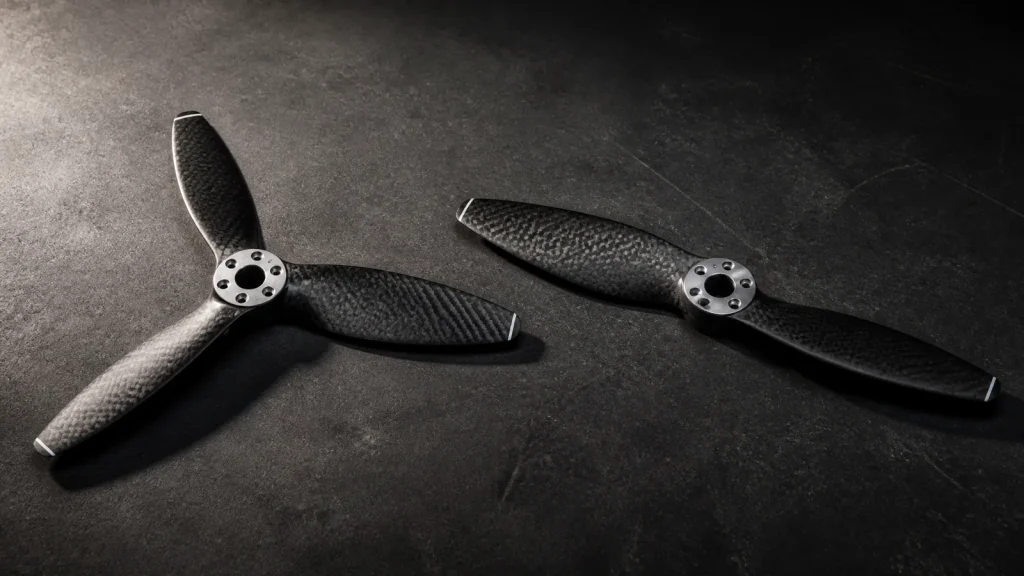 Three Blade vs Two Blade Propeller: Heavy-Lift Trade-Offs
One extra blade at the same diameter buys thrust margin and a lower hover RPM, and costs current, peak efficiency and stowed volume. Here is when it pays.
-
 How to Handle a Warranty Claim on Motors and ESCs
“The motor stopped” describes a symptom. It does not identify the delivered part, show the conditions before the event or explain what happened afterward. That is why a…
-
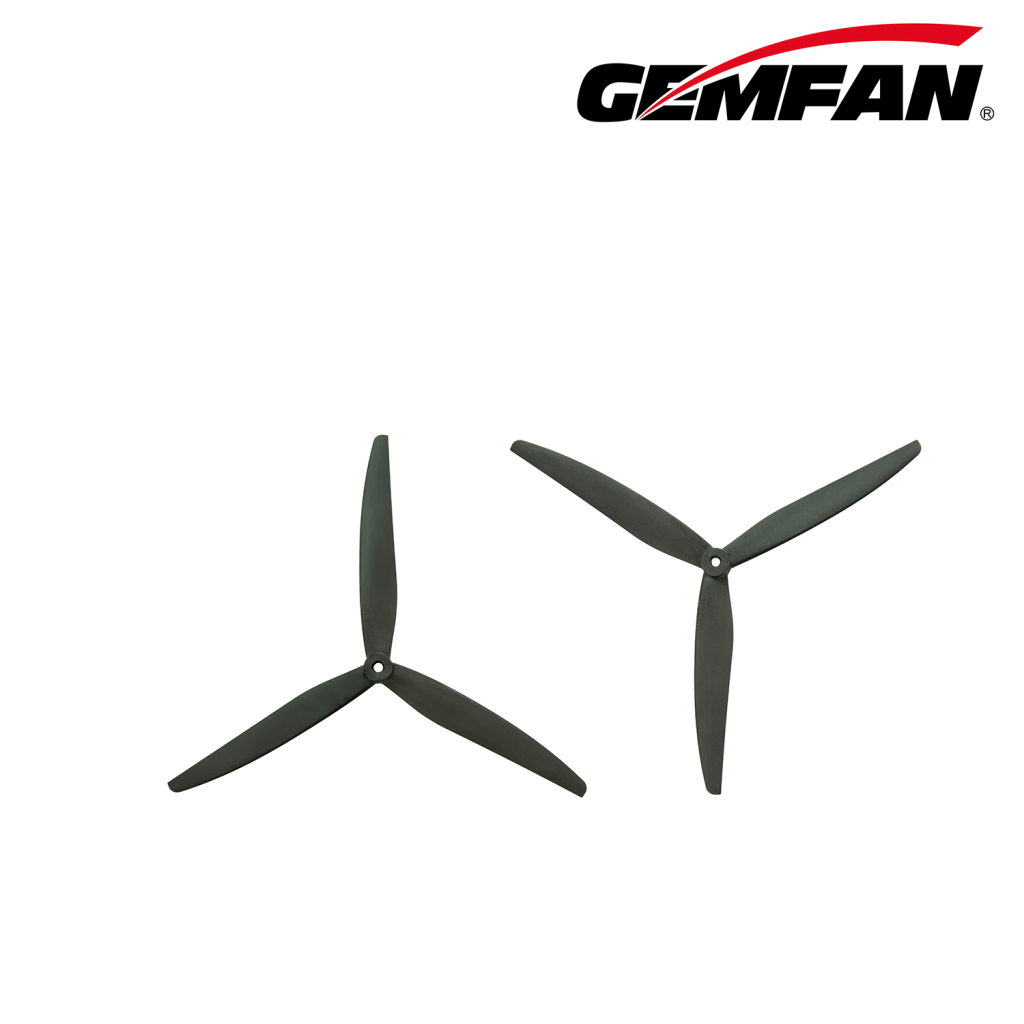 CW vs CCW Propellers: Avoiding Mix-Ups in Dealer Kits
A box can contain the right diameter, the right pitch and the right number of propellers, yet still be wrong for the aircraft. The missing check is handedness.…
-
 Drone Parts Lead Time: Stock, Samples and OEM Explained
Stock, sample and OEM orders start their clocks on different events. Map each track, buffer the critical path and give suppliers a real ship window.