


SineSic FOC ESC Voltage Classes: 400V, 600V and 800V Compared
TL;DR
- A SineSic voltage class fixes the DC bus window and the insulation target. It does not fix the output power, and it does not fix the current rating — those are separate decisions.
- The 400V line runs 30A to 160A, the 800V line runs 50A to 180A, and the 600V line runs 15A and 30A only. No 60A or larger 600V model exists in our catalog today.
- If a platform needs more than 30A on a 600V-class bus, the honest options are a 400V-class or 800V-class architecture, decided before the airframe wiring is frozen.
An 800V FOC ESC is a bus-voltage decision before it is a current decision. The class sets insulation, connector ratings and wire size; the amp figure sets thermal headroom. This comparison covers the three SineSic FOC voltage classes we stock — 400V, 600V and 800V — using the current ratings that actually exist in each line.
Related UAV resources: FOC ESC options, OEM support, and contact REACHSKY.
SineSic FOC ESC Voltage Classes: What Each Class Fixes
A voltage class is an insulation and bus-window specification, not a power rating. Moving from 400V to 800V doubles the available bus voltage, but the ESC is still chosen by current, thermal path and switching loss. Four things change when the class steps up:
- Insulation coordination. Creepage and clearance between phase nodes, DC bus and housing grow with bus voltage. That is a layout and mechanical cost, not a firmware setting.
- Component blocking voltage. MOSFETs, bus capacitors and gate drivers need a higher withstand, which usually means more switching loss per amp.
- Connector and cable rating. A connector that is comfortable at 400V can be marginal at 800V even when its current rating is fine.
- Stored energy. Bus capacitance energy rises with the square of voltage, so pre-charge and discharge become part of the installation.
Current rating sits on top of all four. Two ESCs in the same class can be 30A and 180A apart and share nothing but the bus window.
The three classes side by side
The current ladders are not parallel. 400V gives the most steps, 800V covers the top end, and 600V is a narrow, low-current line.
The three classes side by side.
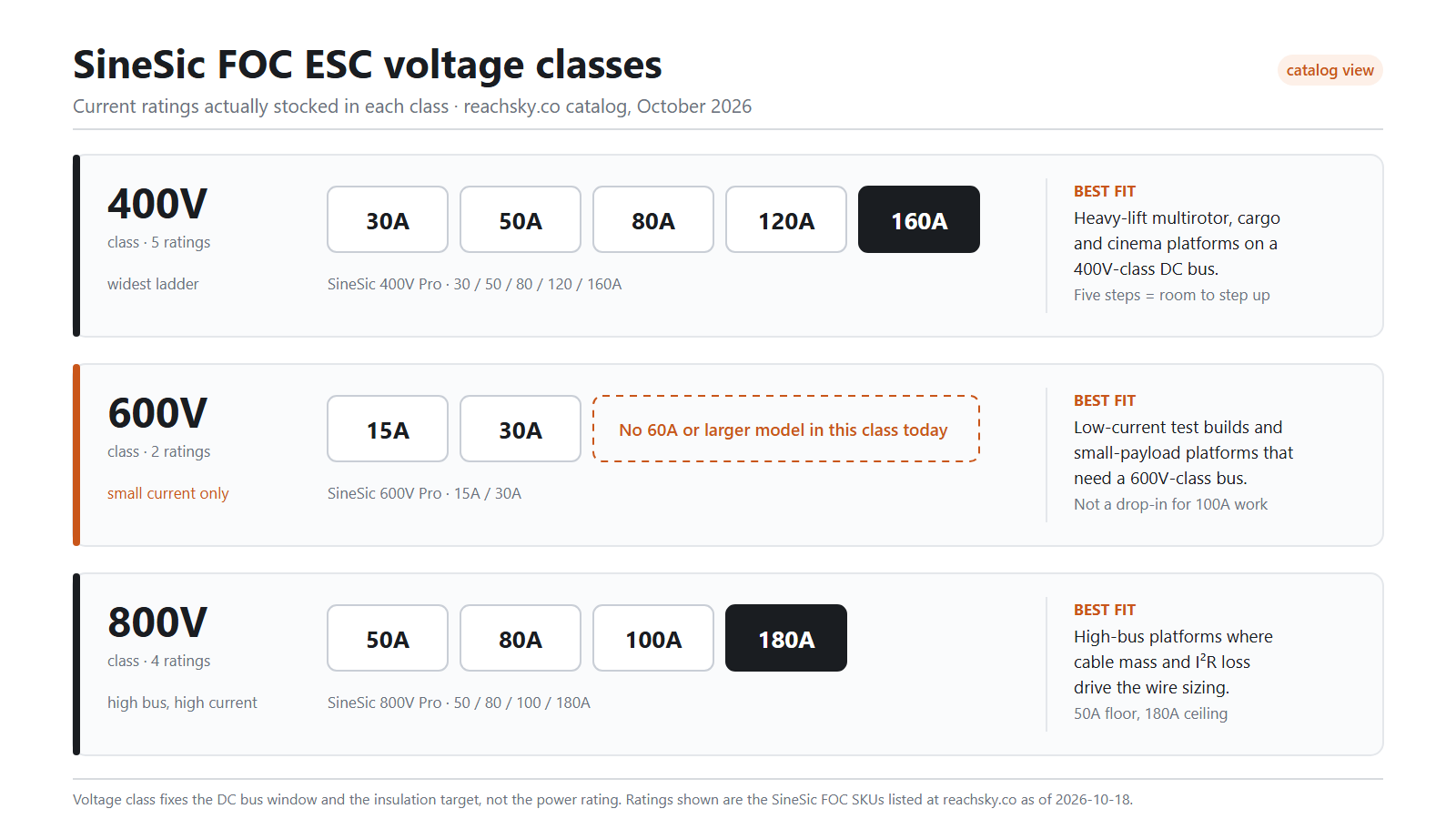
Read the table as three separate product lines, not one line with three taps.
400V: the widest current ladder
The 400V line is the only class with a continuous ladder from 30A to 160A, and that matters more than the voltage label. Five steps mean you can move up one rating after a thermal test instead of re-architecting the power stage. Where 400V wins:
- Iteration. A 160A build can be de-rated to 80A or 120A during prototype tuning without changing bus voltage.
- Supply. Five stocked ratings give a second source inside the same family.
- Wiring. Lower bus voltage means less insulation stress on connectors and lugs.
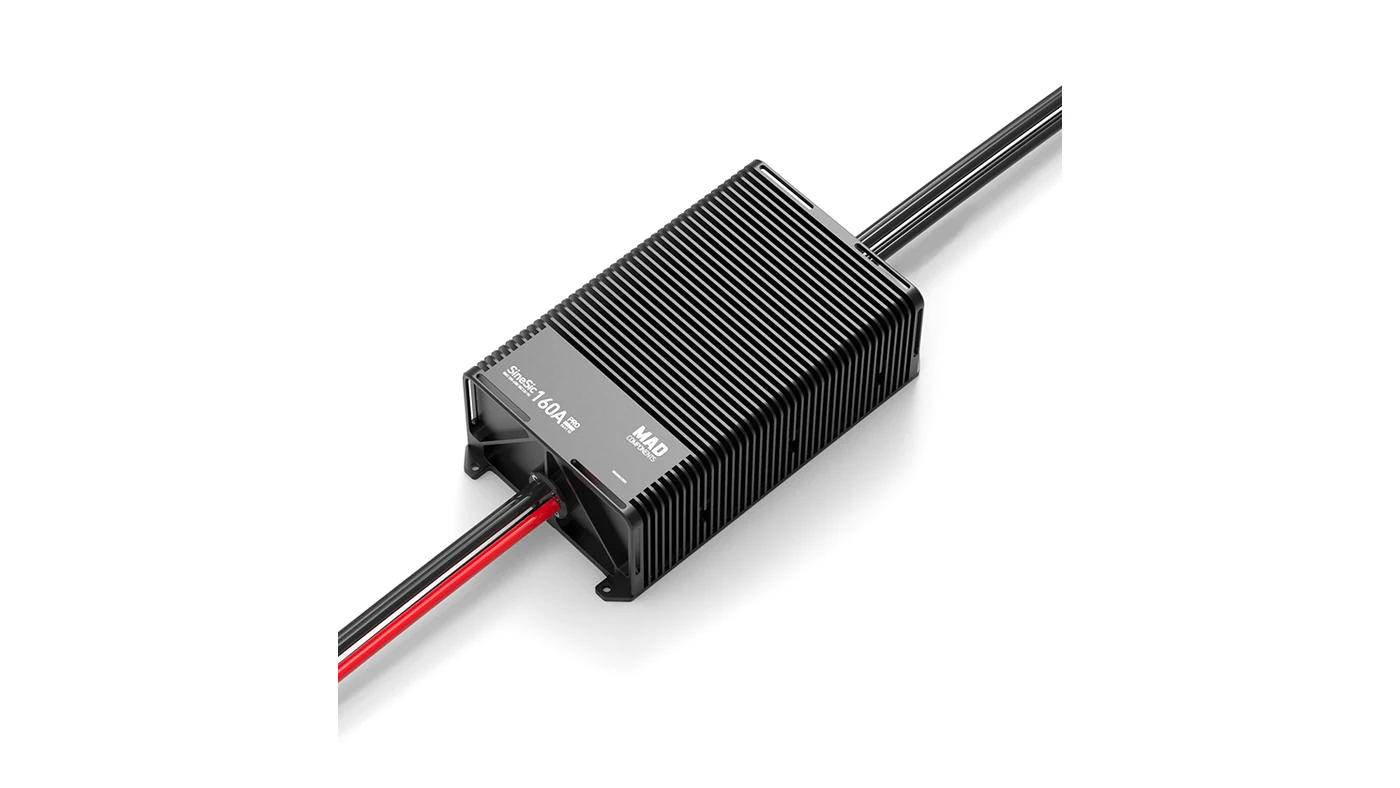
Where 400V stops: at the same output power, current is higher, so cable mass and I²R loss grow — real on a large airframe with long pack-to-arm runs. The 160A Pro 400V is the ceiling of this line: SineSic 160A Pro 400V.
600V: two ratings, and that is the whole line today
The 600V line currently offers 15A and 30A. That is the complete list — there is no 60A, 80A or 100A 600V model in our catalog, and we will not quote one as if it exists. A 600V-class bus looks attractive on paper: less current than 400V for the same power, less insulation burden than 800V. But a 30A ceiling limits what the class can drive. At 600V and 30A the input ceiling is roughly 18kW before efficiency and derating margin — enough for a small payload platform, not a heavy-lift arm. What that means in practice:
- Above 30A at 600V, the 600V line is not a candidate. Move to a 400V or 800V architecture deliberately.
- For bench articles, test rigs and low-power demonstrators, 15A and 30A keep bus voltage high for insulation experiments.
- Do not design a harness, connector set or pack around an assumed future 600V high-current SKU.
800V FOC ESC: four ratings from 50A to 180A
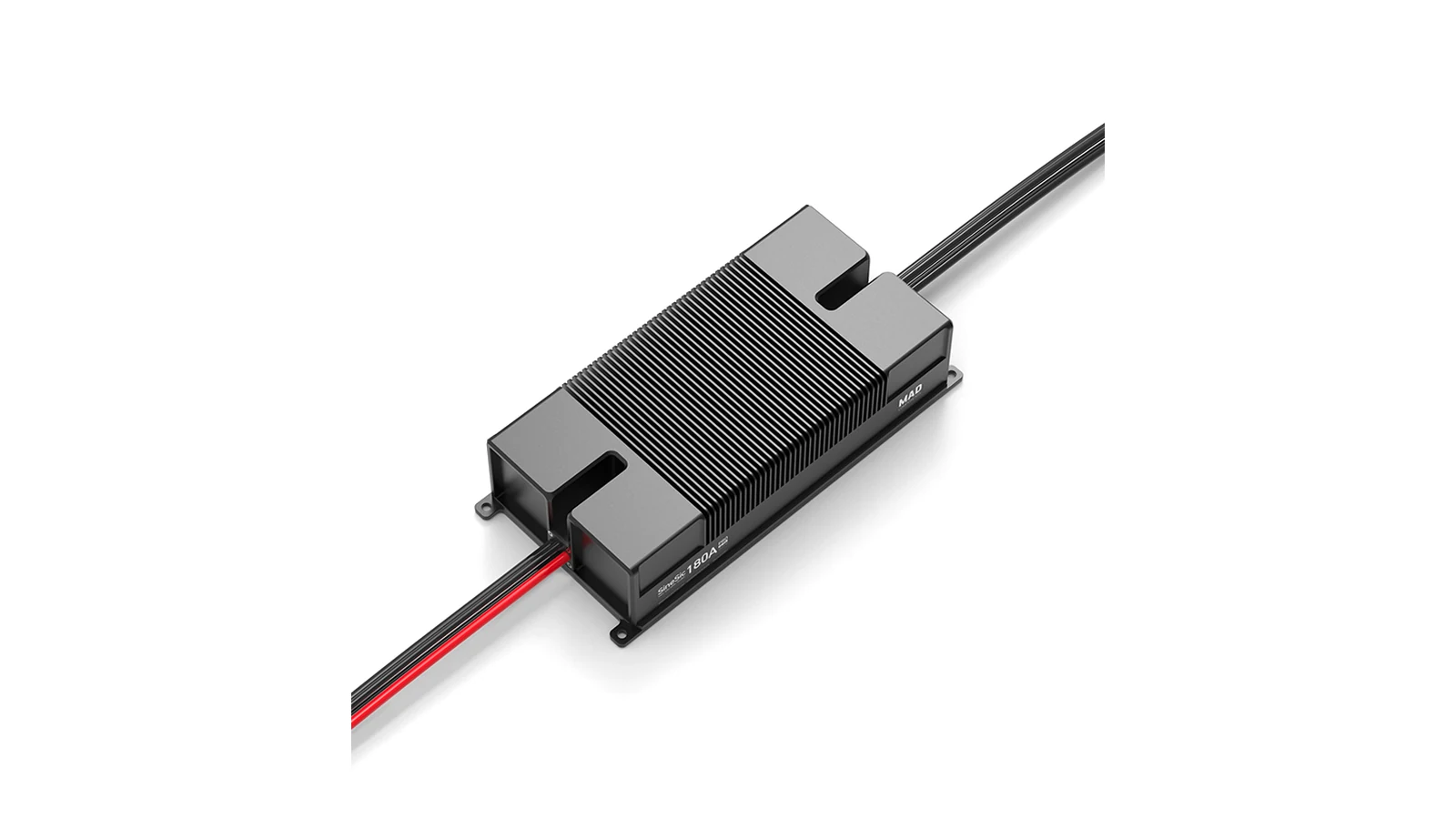
The 800V line starts at 50A and goes to 180A in four steps: 50A, 80A, 100A and 180A. There is no unit below 50A, so a low-power 800V demonstrator is not served by this line. The trade at 800V: for a given shaft power, current drops roughly with the ratio of bus voltages, and conductor mass falls with it. You pay in insulation — more clearance, higher-rated connectors, tighter assembly discipline, and a pre-charge and discharge routine the crew follows every time. The 180A Pro 800V sits at the top of the range — see SineSic 180A Pro 800V. In our own assembly checks, the first thing we verify on a 180A build is not the firmware but lug torque and strain relief at the lead exit. A loose lug at 180A shows up as heat long before it shows up as a fault code.
How do you choose between 400V, 600V and 800V?
Choose the class from the pack and the harness, then the current from the thermal test. The other order produces a platform that fits the ESC and not the aircraft.
- Fix the pack. Bus voltage comes from cell count and BMS topology, not from the ESC you like.
- Estimate worst-case phase current at maximum continuous thrust plus margin, using the propeller you intend to fly.
- Check the ladder. Under 30A, all three classes are open. Between 50A and 160A the choice is 400V or 800V. Above 160A the 180A 800V unit is the only stocked option.
- Compare harness mass. At 800V the same power needs less copper; on long arm runs this can outweigh unit cost.
- Confirm the support chain. Connectors, pre-charge, fusing and service staff all have to match the class.
For the control side, BLDC vs FOC ESC control explains why FOC holds up on high-pole-count motors, and continuous vs burst current ratings explains how to read the amp figure you are about to size against.
Current headroom, insulation and wiring: where cost moves
Three cost lines move when you change class, and only one is visible on a quotation. Current headroom. Heat rises with the square of current, and the finned housing only removes what reaches it. Size for the continuous figure, then confirm burst behaviour in the datasheet rather than on the label. Insulation and clearance. Higher bus voltage needs more distance between conductors and more attention to potting and end-block geometry. Altitude makes it harder: thinner air withstands less, so a clearance that passes at sea level needs review for high-altitude work. Insulation coordination for low-voltage equipment is defined in the IEC 60664 series, the framework your safety reviewer will use. Wiring and terminations. At 800V the cable rating, connector rating and lug become weak points before the silicon does. Two habits prevent most failures we see: torque lugs to the datasheet value with a calibrated driver, and keep phase leads away from signal and CAN runs for their full length.
What the price gap between classes pays for
The SineSic HV range runs from roughly USD 700 to USD 8,000 across classes and current ratings. The gap is not a voltage premium; it is bill of materials and test time.
- Semiconductors. Higher blocking voltage at the same current costs die area and switching loss.
- Thermal mass. Current rating drives housing size, fin area and potting volume.
- Insulation hardware and test. Clearance, pre-charge parts and HV checks scale with class.
A 30A 600V unit is not a cheap route to 100A.
Safety boundaries on an HV DC bus
An 800V DC bus is lethal, and it stays live after the pack is disconnected. Plan for that before the first power-up.
- Discharge the bus and verify with a meter before touching terminals. Capacitors hold charge after the contactor opens.
- Use insulated tools, rated gloves and a face shield for first power-up and for probe work on a live bus.
- Lock out and tag the pack during assembly. One person holds the key.
- Pre-charge through a resistor. Closing a contactor onto an empty 800V bus spikes current and damages connectors.
- Follow the rules that apply where the aircraft is built and flown; the OSHA electrical safety pages are a reasonable starting point for a written procedure.
These measures reduce risk; they do not make an HV bus safe to handle casually.
Procurement notes for HV FOC ESC programs
HV orders are usually project orders, so commercial terms matter as much as the datasheet.
- MOQ depends on SKU, marking and packaging. Samples start at 1 pc.
- Terms: EXW, FOB, CIF or DDP.
- Lead time: stock 3–10 business days, samples 7–15, OEM or private label 25–40 from artwork sign-off and deposit.
- Warranty: 12 months unless the quotation says otherwise; claims tied to PO and lot, answered next business day, closed in writing.
- Compliance: ISO 9001 quality system, RoHS and REACH aligned processes, documents on request.
Send pack voltage, continuous and burst current, motor and propeller, ambient and altitude, harness length, quantity and ship window. That is enough for an engineer to answer.
Frequently Asked Questions
Is 800V better than 400V for a heavy-lift drone? Not automatically. 800V lowers current and copper mass for the same power, but adds insulation, connector and service requirements. Choose an 800V FOC ESC when harness mass or cable loss dominates; choose 400V for the widest current ladder and simpler wiring. Can I run a 100A load on a 600V-class SineSic ESC? No. The 600V line offers 15A and 30A only. A 100A load needs a 400V or 800V unit — the 400V line reaches 160A, the 800V line reaches 180A. Does a higher voltage class ESC deliver more power? No. Power comes from the motor, propeller and the current the ESC can pass continuously. The class sets the bus window and insulation target; the current rating sets thermal capability. Is there a 400V version of the 180A unit? No. The 400V line stops at 160A, and 180A exists only in the 800V line. A platform locked to a 400V bus is sized to 160A continuous or less. What do you need for an OEM quote on an HV FOC ESC? Pack voltage, continuous and burst current, motor and prop, ambient temperature, altitude, harness length, quantity and target ship date. Add any marking or packaging requirement, and the reply comes back with a matched unit.
Next step
Pick the class from the pack, pick the current from the thermal test, then confirm the SKU against a real drawing. If the numbers are still open, our engineers will work through the matching with you: send the project details for an OEM quote. Single units and prototypes ship from stock in the SineSic FOC ESC range in the shop; the full line sits under FOC ESCs for commercial and industrial UAVs.
Before you energise a 400 V, 600 V or 800 V bus, work through the high voltage ESC wiring precharge sequence.
All products are supplied for civil end use only.
REACHSKY Engineering Team — propulsion and power electronics support for UAV builders, integrators and distributors. We answer technical questions with datasheets and drawings, not adjectives. Last updated: 2026-10-18
Related articles
-
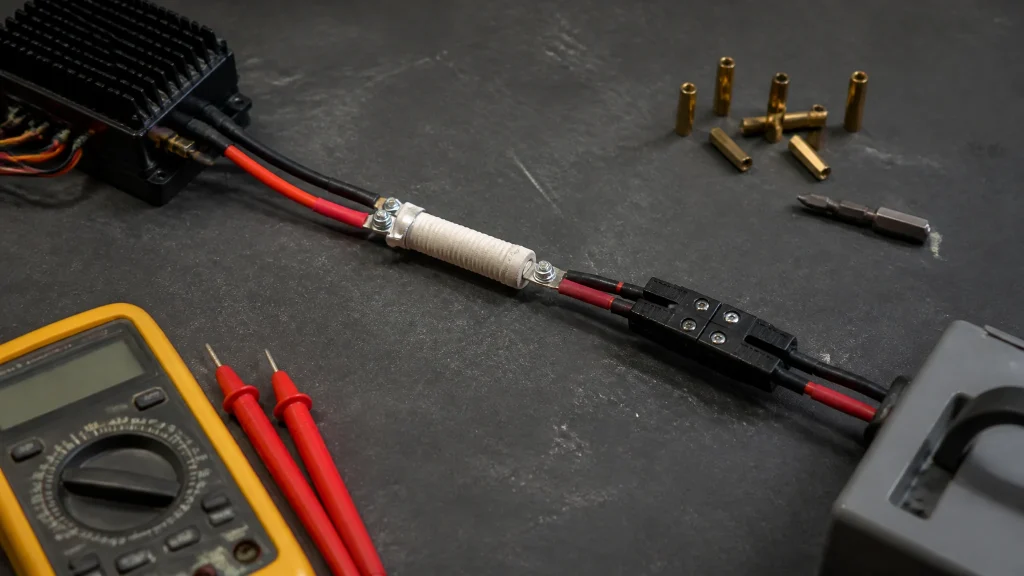 High Voltage ESC Wiring Precharge: Steps Before Power-Up
Why an 800 V connector arcs on contact, how to size the precharge resistor, and the six-gate checklist we run before an HV ESC sees pack voltage.
-
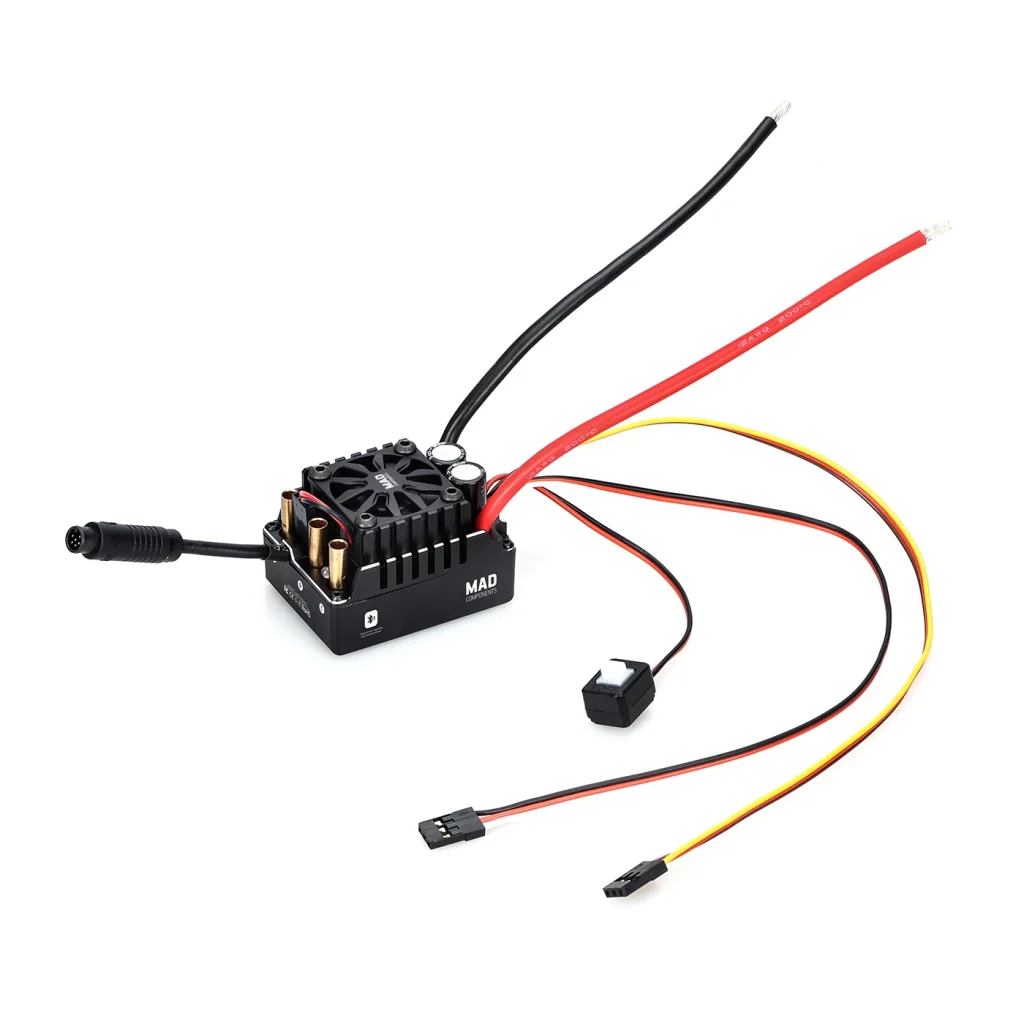 RC Car ESC Selection: MAX Series for 1/5 to 1/10 Scale
Two 1/5-scale vehicles can ask very different things of an ESC. Battery configuration, motor, gearing, tires and driving conditions all affect the job. A scale label narrows the…
-
 ESC Overheating Causes and How to Fix Them
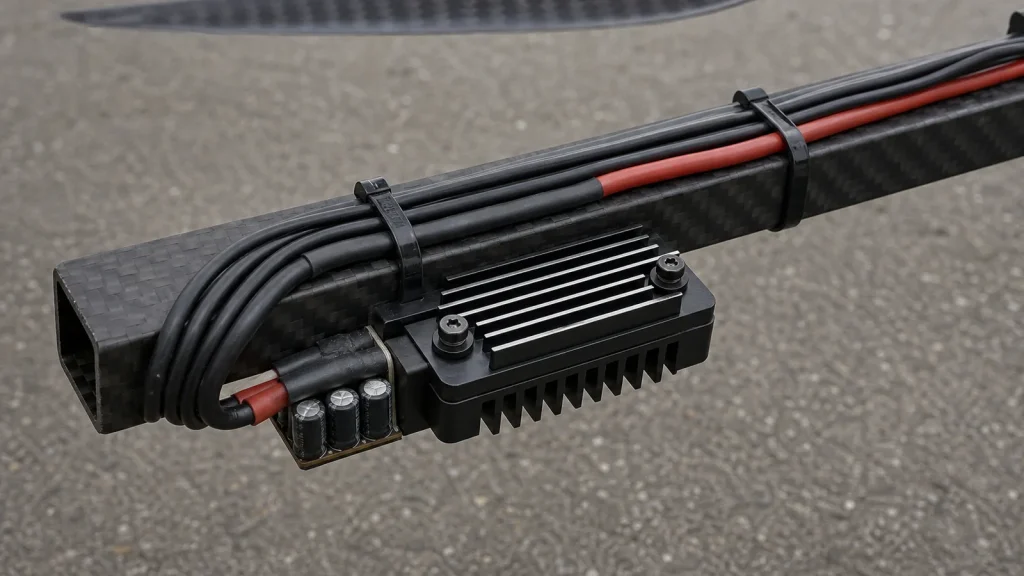
Six causes of ESC overheating, ranked by how often they are the real problem, plus the order to measure them in and how to prove the fix held.
-
 DShot, OneShot and PWM: ESC Protocols Explained
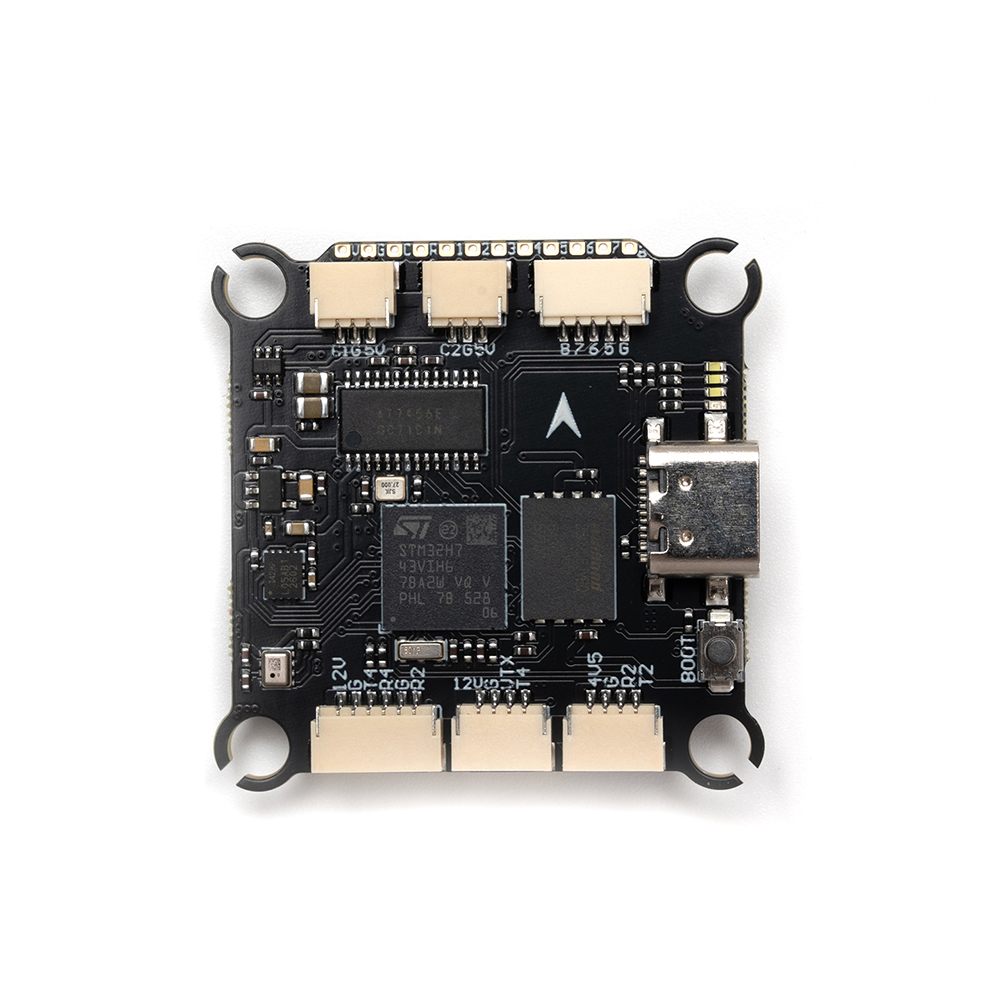
A flight controller and an ESC can share the right battery voltage and still fail to communicate. The throttle command needs its own compatibility check: the controller must…